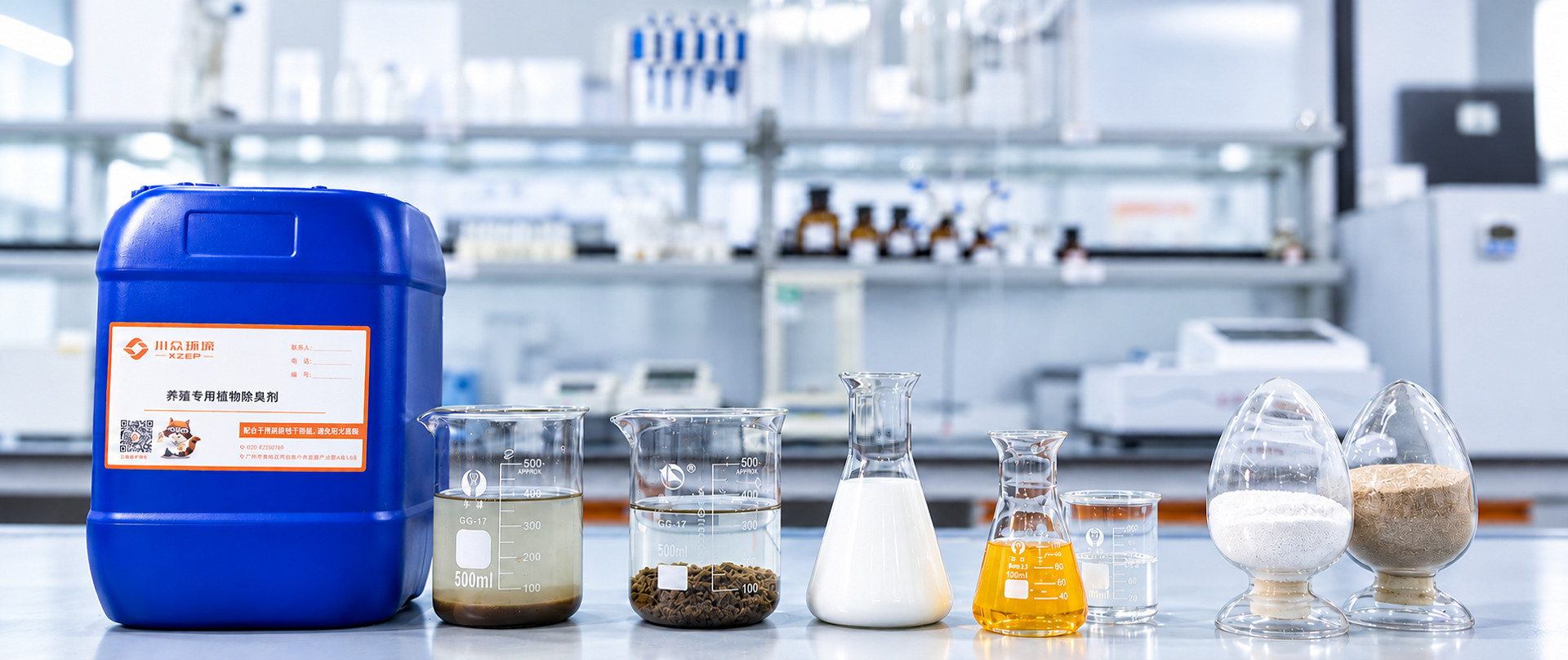
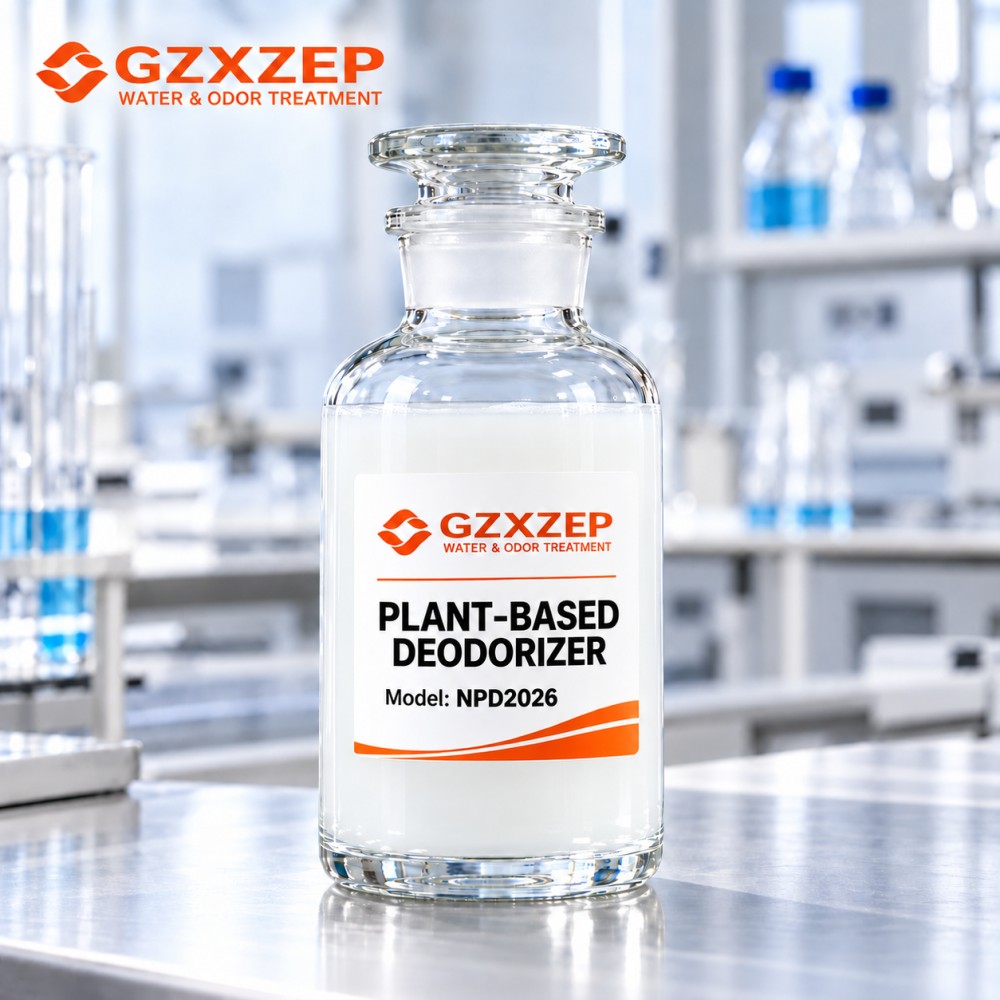
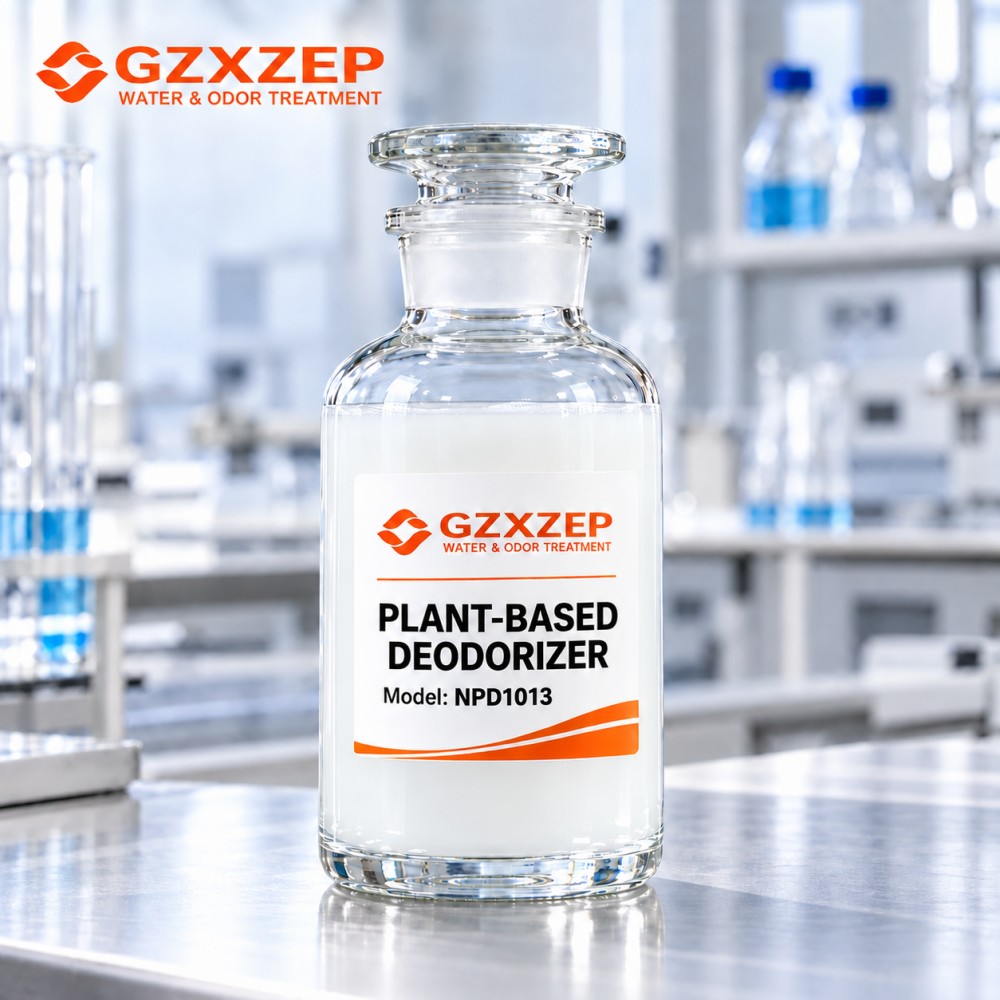
GZXZEP Plant-Based Deodorizer is an industrial odor control solution developed for odorous exhaust air generated during industrial production. Its plant-derived active ingredients interact with sulfur-containing, nitrogen-containing and organic odor compounds, helping neutralize unpleasant odors rather than simply masking them.
It is widely used in production workshops, exhaust collection systems, spray towers, wet scrubbers, ventilation ducts and exhaust outlets across chemical processing, food processing, feed production and other odor-generating industries.
• Plant-derived formulation with a favorable safety profile; use in accordance with the SDS.
• High odor-removal efficiency under suitable contact conditions; treats odor compounds rather than simply masking them with fragrance.
• White emulsion, readily diluted with water and simple to apply.
• Application-specific formulation for industrial residual exhaust odor.
• Compatible equipment: fog cannon spraying, drone spraying, high-pressure misting systems and wet scrubbers/spray towers.
• Chemical and biopharmaceutical plants.
• Food and ingredient processing.
• Rubber, plastics and general manufacturing.
• Wet-scrubber or spray-tower polishing stages.
• Model: NPD3010.
• Appearance: White emulsion.
• pH: 6.5–8.0.
• Recommended dilution: 1:500–1:1000 with water.
• Compatible equipment: fog cannon spraying, drone spraying, high-pressure misting systems and wet scrubbers/spray towers.
1. Diluted liquid contacts odor-bearing air through misting, spraying or a spray tower.
2. Odor compounds are captured in the droplets and react with the plant-derived formulation.
3. The treated compounds are converted into lower-odor or more stable forms; dosage and contact time are adjusted to the actual odor load.
• Packaging: 25 kg drum or 1,000 kg IBC.
• Storage: Store in a cool, dry and shaded place. Protect from freezing, excessive heat and direct sunlight.
• Keep the container tightly closed after use.
• Customized formulation — The grade and dosage are selected according to exhaust composition, temperature, airflow and the existing pollution-control process. This normally provides better treatment performance and overall cost efficiency than a one-formulation-for-all product.
• In-house manufacturing — Competitive factory pricing, stable batch quality and fast lead times.
• In-house laboratory — Rapid sample testing, formulation screening and continuous product improvement.
• Engineering support — Professional engineers provide product selection, dosing, commissioning and after-sales troubleshooting support.