

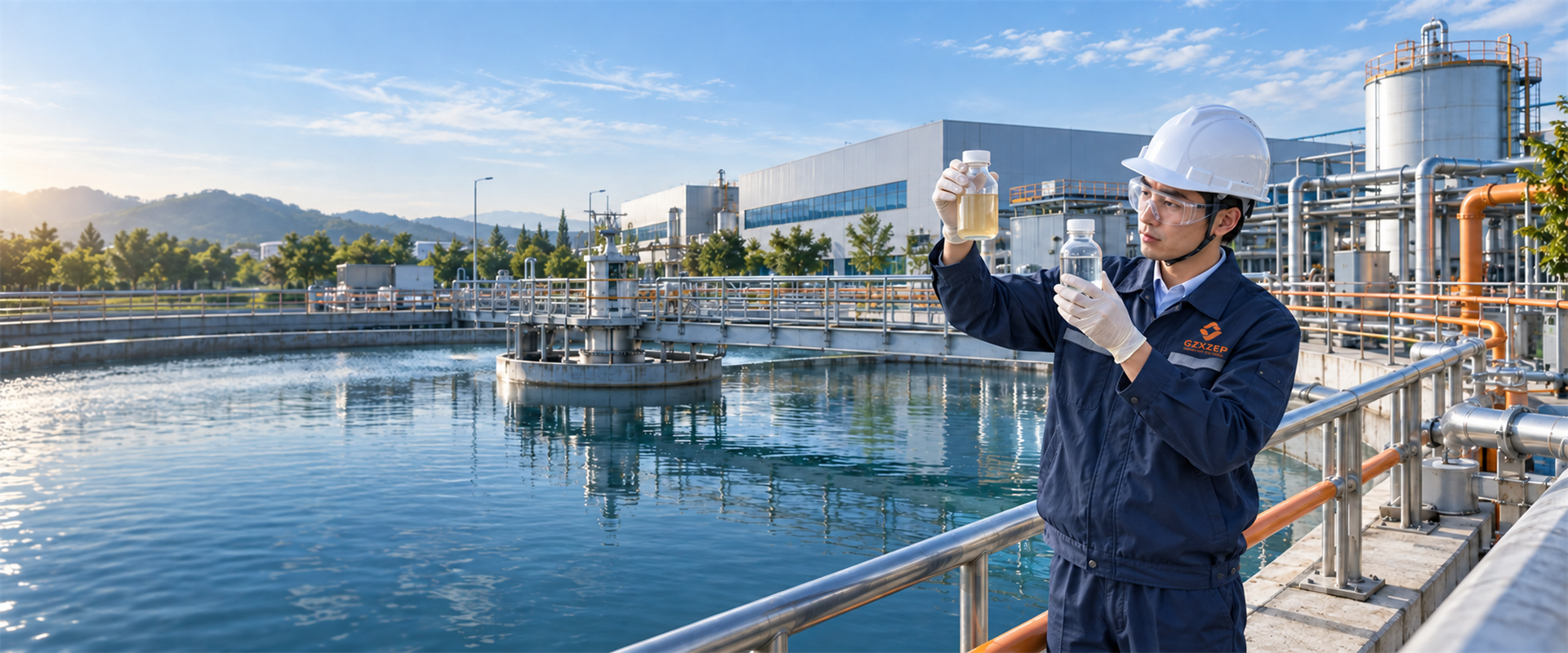
Treatment products for degreasing wastewater, emulsified oil, organic load, evaporation and membrane reuse.
Electroplating and surface-treatment plants generate segregated acidic, alkaline, degreasing, rinsing and concentrated waste streams. Stable oil emulsions, complex organic load, salinity, foam and membrane fouling can remain after the plant applies the required metal-specific pretreatment.
GZXZEP products support selected downstream problems. The current product list does not include a dedicated dissolved-heavy-metal removal chemical, so metal removal must be designed separately.
| Treatment challenge | Treatment approach | Relevant GZXZEP products | Application point |
| Emulsified degreasing wastewater | Break stable oil and surfactant emulsions before separation. | OWT Series Emulsion Breaker | Physicochemical pretreatment |
| Residual organic COD after pretreatment | Evaluate biological cultures after toxic metals and extreme pH are controlled. | XZ8811 COD-Degrading Culture | Biological treatment stage |
| Foam in wastewater or evaporation | Select according to temperature and process. | XZ8605; XZ-0188 for MVR | Foaming tank or MVR system |
| RO scaling or fouling in reuse | Use feedwater analysis and membrane limits to select chemicals. | XZ9901/XZ9902; XZ9903; XZ9905/XZ9906 | RO feed and CIP |
The OWT Series helps destabilize emulsified oil from cleaners, machining residues and surfactants. Grade and dose should be selected by jar testing before flotation or settling. This step does not replace metal precipitation and separation.
Link: Explore Wastewater Treatment Chemicals
XZ8811 may be evaluated for residual biodegradable COD after inhibitory metals and extreme pH are controlled. XZ8605 serves general wastewater foam, while XZ-0188 is the listed product for MVR evaporators.
Link: Explore Microbial Treatment Products
Link: Explore Wastewater Treatment Chemicals
RO chemicals should be selected only after pretreatment controls oil, suspended solids and metal precipitates. Use scale projection, foulant analysis and membrane limits to select antiscalant, biocide or CIP cleaner.
Link: Explore RO Membrane Treatment Chemicals
GZXZEP provides product selection, laboratory evaluation and application support. Final performance depends on wastewater characteristics, process conditions, equipment and site operation.
No dedicated dissolved-heavy-metal remover is listed in the current website workbook. Metal treatment requires speciation, pH adjustment and a suitable precipitation or separation program.
Start with the OWT Series and select the grade by jar testing on the actual wastewater.
High dissolved-metal concentrations may inhibit biological treatment. Confirm adequate upstream control before a biological trial.
Provide the wastewater source, flow, recent analysis, current treatment process, chemicals now in use and the required discharge or reuse target. A sample may be requested after the initial review.
Share the segregated stream, metal profile, oil and COD data, existing pretreatment and reuse target for product screening.