

Why “smells better” is not odor control
Many odor products on the market are perfumes: they add a stronger, more pleasant smell on top of a waste stream. The moment gas concentration rises — a hot afternoon at a transfer station, a fresh delivery of food waste, a turnover of manure pit — the underlying odor breaks through and complaints return. Regulators do not measure fragrance; they measure hydrogen sulfide (H₂S), ammonia (NH₃) and total odor rate. If your chemistry does not remove those molecules, you are renting a good smell, not solving a problem.
What a plant-based deodorizer actually is
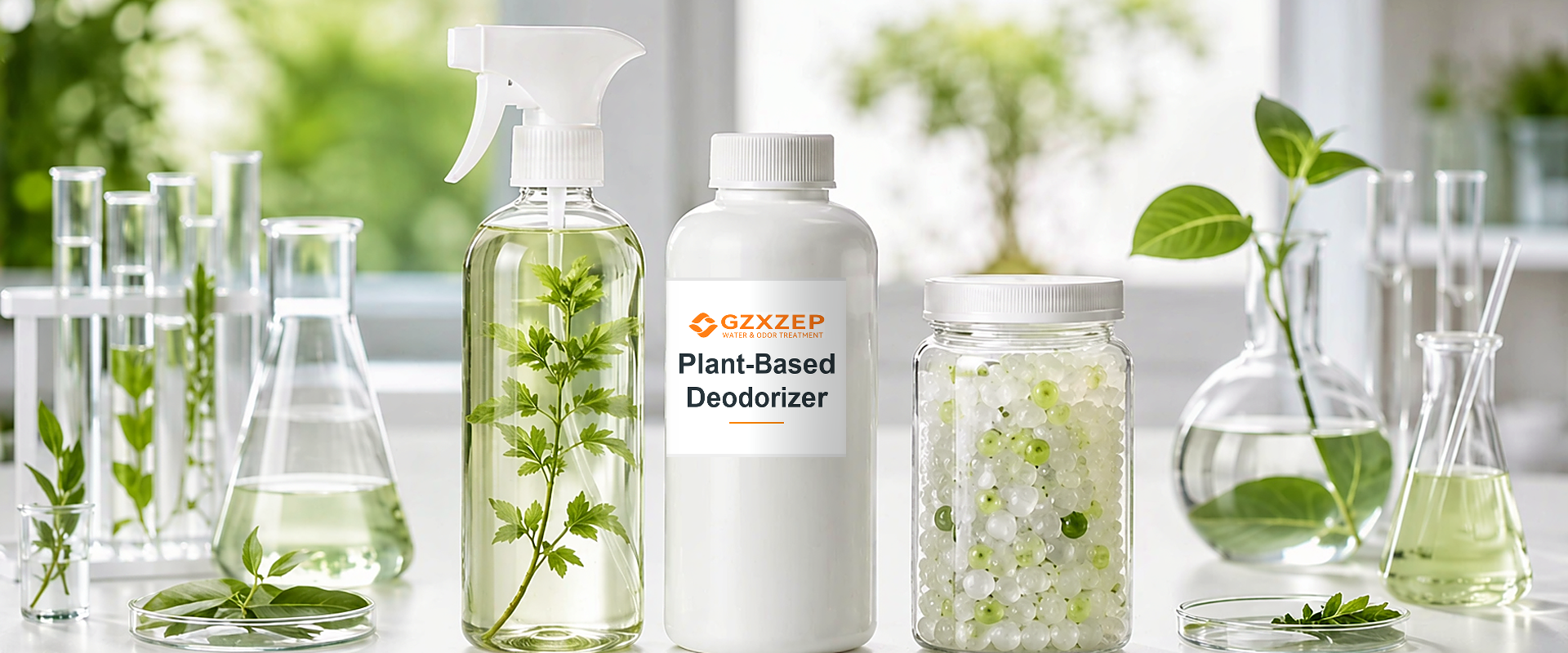
A genuine plant-based (botanical) deodorizer is a blend of active molecules extracted from plants — organic acids, polyphenols, aldehydes, terpenes and plant-derived surfactants. GZXZEP screens a library of more than 300 natural plant extracts and blends them by odor matrix: sulfur-dominant streams need different actives than amine-dominant ones. The product is then diluted on site and applied as a fine mist, a spray-tower scrubbing liquid or a fog-cannon cloud.
The three-step mechanism: capture, absorb, neutralize
When botanical concentrate is diluted 1:100 to 1:500 and atomized, it forms billions of micro-droplets roughly 30–100 microns across. That mist presents a very large reactive surface area in the air path of the odor plume.
Odor molecules — H₂S, NH₃, methyl mercaptan, amines, volatile fatty acids — are drawn into and dissolve within the droplets. Plant-derived surfactants lower surface tension, accelerating this mass transfer.
Inside the droplet, the active plant molecules react with the dissolved odorants and convert them into non-volatile, odorless compounds. This is chemical neutralization — the odor molecule is transformed, not hidden behind perfume.
Key distinction: masking adds a competing smell; neutralization removes the molecules that cause the smell. Only the second approach survives measurement.
What third-party testing showed
Because neutralization is measurable, it can be verified. Accredited third-party laboratory testing of our NPD plant-based deodorizer reported:
93.9% removal of hydrogen sulfide (H₂S)
94.2% removal of ammonia (NH₃)
>99% removal of methyl mercaptan
Safety results from the same panel: oral and inhalation toxicity classified as practically non-toxic, heavy metals not detected in the finished product, and corrosion to carbon steel of just 0.0041 mm/a. The formulation base is biodegradable. Full reports are available on request.
* Reported under specified laboratory test conditions; actual site performance depends on gas composition, temperature and dosing.
Where the chemistry works best
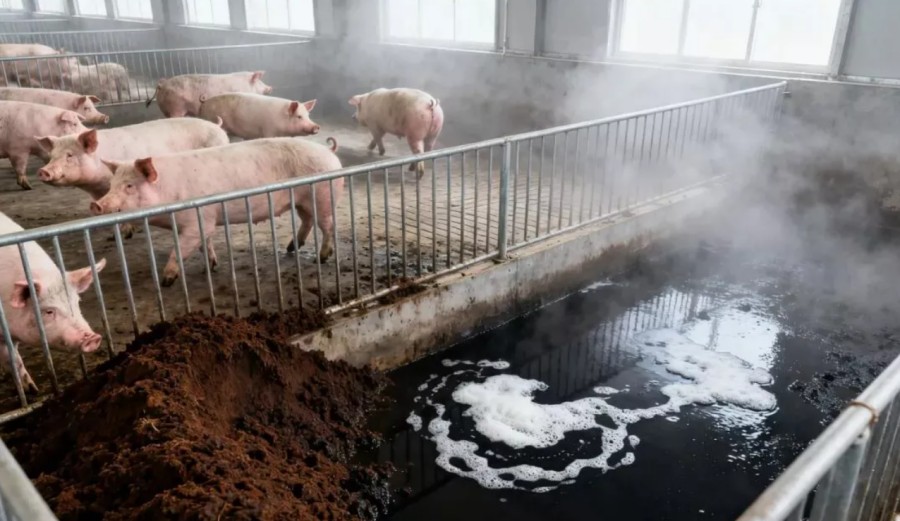
Typical applications: municipal waste transfer stations, landfills and tipping floors; food-waste and kitchen-waste processing; large livestock farms and manure handling; feed mills and aquafeed dryers; and industrial exhaust polishing in spray towers. Application is matched to the source — fog cannons for open areas, spray rings and towers for ducted air, fine-mist lances for enclosed halls.
How to evaluate a botanical deodorizer supplier
Ask for gas-phase removal data (H₂S, NH₃, odor unit reduction) — not just a pleasant fragrance panel.
Ask for safety documentation: oral/inhalation toxicity, heavy metals, corrosion, biodegradability.
Request a dilution screening on your actual gas matrix rather than a generic 1:200 number.
Prefer suppliers with pilot and engineering support, not just drum delivery.
Our R&D Center runs exactly these screens for customers before any site trial. If you are comparing odor control chemistries for a waste facility, send us your gas matrix and we will recommend the right NPD grade and dilution.